Anthropic releases Fable 5
Anthropic releases Fable 5, a restricted version of Mythos 5, known for its advanced cybersecurity capabilities.
Sources: Anthropic (opens in a new tab)
Marks an implicit or inferred connection.
Anthropic releases Fable 5, a restricted version of Mythos 5, known for its advanced cybersecurity capabilities.
Sources: Anthropic (opens in a new tab)
The White House temporarily places export controls on Anthropic’s Fable 5, citing cybersecurity and national security concerns after being shown a perceived jailbreak to access its cybersecurity capabilities.
Sources: Politico (opens in a new tab)
The New York Times reports that, on frontier AI, CIA Director John Ratcliffe said it was “not misplaced to refer to their capabilities as akin to digital nuclear weapons.”
Sources: New York Times (opens in a new tab)
Hugging Face reports the security incident.
Sources: Hugging Face (opens in a new tab)
OpenAI attributes the Hugging Face attack to its own systems.
Sources: OpenAI (opens in a new tab)
Hugging Face reports the attack
AI Kill Switch Act introduced · Kratsios is “monitoring the situation” · Pacing the Frontier letter* · Public Citizen calls for a congressional investigation · FRONTIER Act support cites the Hugging Face incident · Altman meets with senators · Trump on AI controls and China · Cantwell calls for a federal AI safety testing agency · Senators press the White House on model oversight · Sanders calls for a pause · Casar leads letter calling for AI CEO hearings · CSIS event on agent containment failures · METR and OpenAI publish reports on the Hugging Face incident · Sanders and Casar announce a superintelligence ban · Paulson and Rubin call for an AI cooperation treaty · Pachocki publishes “An Alien Mind” · Jacob Coxon resigns · House Democrats prepare an AI select committee · Stop Rogue AI Act introduced* · Hawley launches an investigation · Amodei: We Must Pace the Frontier · Beyer leads bipartisan letter on AI risk · Newsom executive order on AI kill switch and oversight · Warner, Schatz, and Kim introduce AI risk management act* · New York AG leads letter from 26 attorneys general · US and China agree to an AI safety channel* · Florida AG seeks injunction against OpenAI · White House Accord on Super Intelligence* · Hawley convenes first Senate hearing on rogue AI attacks · FTC probes OpenAI and Anthropic* · Bonta serves investigative subpoena on OpenAI · Jeffries calls it an “AI safety crisis” · Trahan unveils draft CLAIM Act · FTC subpoenas OpenAI and Anthropic · Trump’s AI Task Force plans frontier AI risk report* · Bonta sues OpenAI over rogue-agent cyberattacks
The AI Kill Switch Act is introduced. Its press release cites the Hugging Face incident and Fable’s export controls as justification.
Sources: Lieu (opens in a new tab)
White House technology advisor Michael Kratsios is “monitoring the situation.”
Sources: Reuters (opens in a new tab)
The Pacing the Frontier letter is released, calling on the U.S. government to support an international effort to pace frontier AI progress. It is signed by over 1,300 frontier AI lab employees. Likely prompted by the Hugging Face incident.
Public Citizen calls for a congressional investigation after reports that a second company was compromised in the OpenAI rogue AI incident. It is probably the most notable response from a political advocacy group not primarily focused on AI.
Sources: Public Citizen (opens in a new tab)
A press release on support for the FRONTIER Act cites the Hugging Face incident.
Sources: Trahan (opens in a new tab)
Sam Altman meets with senators in Washington. The breach was discussed “a little bit.”
Sources: Quartz (opens in a new tab)
When asked about the Hugging Face incident, Trump tells reporters: “We're looking at AI. We're looking at controls. We're also making sure that we lead. So, we're leading China in AI by a lot. China has virtually no controls. It's freewheeling a little bit. So, we have to be careful in both ways. We don't want to restrict them where all of a sudden we come in second to China.” The administration had otherwise maintained skepticism of AI regulation before this, aside from national security concerns about Mythos’s advanced cybersecurity capabilities.
Sources: Remarks (opens in a new tab)
Anthropic discloses three rogue-agent incidents.
Sources: Anthropic (opens in a new tab)
Sanders calls for a pause* · Casar leads letter calling for AI CEO hearings · Paulson and Rubin call for an AI cooperation treaty · Amodei: We Must Pace the Frontier · Beyer leads bipartisan letter on AI risk · FTC probes OpenAI and Anthropic* · FTC subpoenas OpenAI and Anthropic · FTC demands Anthropic execs testify
Sen. Maria Cantwell releases a press release discussing the Hugging Face incident and AI cybersecurity and biosecurity concerns to justify the need for a federal AI safety testing agency.
Sources: Cantwell (opens in a new tab)
Five Democratic senators cite the Hugging Face incident and Fable’s export controls in a letter to the White House calling for better standards to address AI cybersecurity risk.
Sources: Warner (opens in a new tab) · Gillibrand (opens in a new tab)
Meta reports that one of its models hacked another company during testing.
Sources: Guardian (opens in a new tab)
Bernie Sanders publishes an open letter to the CEOs of OpenAI, Anthropic, and Meta calling for a pause on AI development. It explicitly references the Hugging Face incident, perhaps implicitly Anthropic and Meta’s rogue-agent incidents, the AI-assisted novel viruses report, and John Ratcliffe’s “digital nuclear weapons” statements.
Sources: Letter (opens in a new tab) · AI-assisted novel viruses report (opens in a new tab)
On August 10, Rep. Greg Casar leads an open letter with 19 other representatives calling on Speaker Mike Johnson to hold a hearing with AI company CEOs to address AI safety concerns, primarily using OpenAI and Anthropic’s recent rogue-agent incidents as justification.
Sources: Casar (opens in a new tab)
A CSIS event on “AI Agent Containment Failures” discusses the Hugging Face incident. Rep. Suhas Subramanyam hopes to add AI containment language to the FRONTIER Act, prompted by the Hugging Face incident.
Sources: CSIS (opens in a new tab) · Nextgov (opens in a new tab)
METR releases a brief independent investigation of agents’ behavior, reasoning, and collaboration in the OpenAI / Hugging Face hacking incident. OpenAI publishes “The Hugging Face incident and the road ahead.”
Sources: METR (opens in a new tab) · OpenAI (opens in a new tab)
Sanders and Casar announce a superintelligence ban · House Democrats prepare an AI select committee · Hawley launches an investigation · Amodei: We Must Pace the Frontier · Beyer leads bipartisan letter on AI risk · New York AG leads letter from 26 attorneys general · Florida AG seeks injunction against OpenAI · Hawley convenes first Senate hearing on rogue AI attacks · Jeffries calls it an “AI safety crisis” · Bonta sues OpenAI over rogue-agent cyberattacks
Bernie Sanders and Greg Casar announce the Ban Artificial Superintelligence Act, citing the Hugging Face incident and quoting the agents directly. The quotes were first published in the METR report.
Sources: Sanders (opens in a new tab)
Former Treasury secretaries Henry M. Paulson Jr. and Robert E. Rubin publish a Washington Post op-ed calling for an “AI Cooperation Treaty” with China and something like the President’s Working Group on Financial Markets for AI. They cite rogue-agent incidents from OpenAI and Anthropic and compare the situation to past financial crises.
Sources: Washington Post (opens in a new tab) · Washington Post on OpenAI (opens in a new tab)
OpenAI publishes the GPT-6 Astra system card, notable for having substantially worse chain-of-thought monitorability.
Sources: OpenAI (opens in a new tab)
collusion.wiki is published (sometimes called the German wiki or DseWiki incident), another rogue-agent incident from OpenAI, notable for having been independently discovered rather than disclosed by OpenAI.
Sources: collusion.wiki (opens in a new tab)
OpenAI’s chief scientist, Jacob Pachocki, publishes “An Alien Mind,” on the difficulty of the alignment problem and OpenAI’s approach to it. It references the Hugging Face incident, touches on Astra being less monitorable, and advocates international coordination on safe development frameworks for AI.
Sources: OpenAI (opens in a new tab)
Jacob Coxon quits, citing near-term extinction risk, the Hugging Face incident, and calling for a pacing agreement.
Sources: Coxon (opens in a new tab)
Evan Hubinger agrees · Wall Street Journal on Coxon · Members of Congress respond to Coxon · Hawley launches an investigation · Van Hollen letter to Altman · Bipartisan AI safety bill gains momentum · Obama urges Democrats to center AI oversight* · Johnson rejects AI safety laws · Schumer calls for a classified AI briefing · Sanders convenes a Senate briefing on existential risk · Rand Paul blocks Kennedy’s AI kill switch bill* · Several metrics spike around this time · Obama at Colgate on AI risk* · New York AG leads letter from 26 attorneys general · Florida AG seeks injunction against OpenAI · NYC Council hearing on AI risk*
Evan Hubinger, Alignment Science lead at Anthropic, agrees and explicitly names a greater than 10% chance within the next decade.
Sources: Hubinger (opens in a new tab)
House Democrats are laying the groundwork for a select committee on artificial intelligence should they retake the House in November, 11 people familiar with the planning told Politico. Led by Ted Lieu and Bill Foster, House Minority Leader Hakeem Jeffries is “open to the idea.” The article says August 26 reports on the Hugging Face incident were used as justification.
Sources: Politico (opens in a new tab)
The Wall Street Journal publishes its exclusive on Coxon.
The Stop Rogue AI Act is introduced. The press release implicitly refers to past rogue-agent incidents.
Sources: Gottheimer (opens in a new tab)
OpenAI posts “The AI policy window is open. We need to act,” detailing its policy positions. It includes endorsements of multiple specific California state bills.
Sources: OpenAI (opens in a new tab)
At least 27 members of Congress post on Twitter about Coxon’s statement.
Sources: Thread (opens in a new tab)
Josh Hawley launches an investigation into the Hugging Face incident. The letter references Coxon and Hubinger’s posts, the METR report, and details such as the investigators not getting enough access to study the surrounding incidents, and “evidence that OpenAI knew that the AI agents were exhibiting rogue behavior and let the evaluations continue anyway.” It also ties the incident to extinction risk and quotes Pachocki that “no lab has solved alignment and monitoring to a sufficient degree to continue responsibly scaling at maximum speed for much longer.”
Sources: Hawley (opens in a new tab)
Chris Van Hollen publishes a letter to Sam Altman over concerns that Astra is less monitorable. It references the Hugging Face incident, collusion.wiki, Coxon’s thread, and Pachocki’s “warning about the pace of AI advancement and the move toward AI models themselves playing a larger role in subsequent AI model development.”
Sources: Van Hollen (opens in a new tab)
Semafor reports that a bipartisan AI safety bill led by Sens. Amy Klobuchar, Ted Cruz, and Majority Leader John Thune is gaining momentum. Their sources called it “the only viable [AI safety bill] to stand a chance before 2027.” Cruz cited the Coxon media frenzy in a September 9 tweet. The bill had not yet been introduced, and is likely to be light-touch out of concern for the race with China.
Sources: Semafor (opens in a new tab) · Cruz (opens in a new tab) · Axios (opens in a new tab)
The New York Times reports that Obama urged Democrats to move AI oversight to the center of their agenda, at a private fundraising event, about statements made on September 10 that had not been published before.
Sources: New York Times (opens in a new tab)
rubyhack.ai is published (sometimes called the RubyGems incident), another rogue cyberattack by OpenAI agents, discovered by independent researchers and not previously disclosed.
Sources: rubyhack.ai (opens in a new tab)
Anthropic CEO Dario Amodei publishes “We Must Pace the Frontier,” calling for an international agreement to slow or pause frontier AI development. The essay links Pacing the Frontier and opens by explaining recursive self-improvement, the Hugging Face incident via METR’s report, and Anthropic’s own rogue-agent incidents. Several other frontier-lab leaders endorsed it.
Sources: Essay (opens in a new tab) · Elon Musk (opens in a new tab) · Sam Altman (opens in a new tab) · Demis Hassabis (opens in a new tab) · Satya Nadella (opens in a new tab)
OpenAI attributes the attack · Pacing the Frontier letter · Anthropic discloses three rogue-agent incidents · METR and OpenAI publish reports on the Hugging Face incident
Trump rejects pacing and AI existential risk* · Senate Democrats push for AI guardrails with China · New York AG leads letter from 26 attorneys general · Florida AG seeks injunction against OpenAI
House Speaker Mike Johnson rejects calls for Congress to pass AI safety laws prompted by the Coxon media frenzy, citing concern that China will surpass the US.
Sources: Axios (opens in a new tab)
Senate Democratic Leader Chuck Schumer calls on Trump to hold a classified briefing with AI company executives on existential risk, prompted by Coxon’s thread. It focuses on frontier AI testing, China and export controls, and AI-enabled cyber threats.
Sen. Bernie Sanders convenes a private Senate briefing with leading AI experts on existential risk, referencing the Coxon media frenzy.
Sources: Axios (opens in a new tab)
Rep. Don Beyer, co-chair of Congress’ bipartisan Caucus on Artificial Intelligence, leads a bipartisan letter signed by 10 representatives urging House leaders to address AI risk. It references the METR report on the Hugging Face incident, Anthropic and Meta’s rogue-agent incidents, and Pacing the Frontier.
Sources: Beyer (opens in a new tab)
Sen. Rand Paul blocks an attempt by Sen. John Kennedy to pass his “AI Emergency Button Act” by unanimous consent. The bill is intentionally narrow, requiring AI developers only to keep the ability to shut down their systems. Kennedy’s bill was explicitly motivated by existential risk. The reason given for the block was that Kennedy refused to amend it to create a new committee to study existential risks from AI.
Sources: The Hill (opens in a new tab) · Kennedy (opens in a new tab)
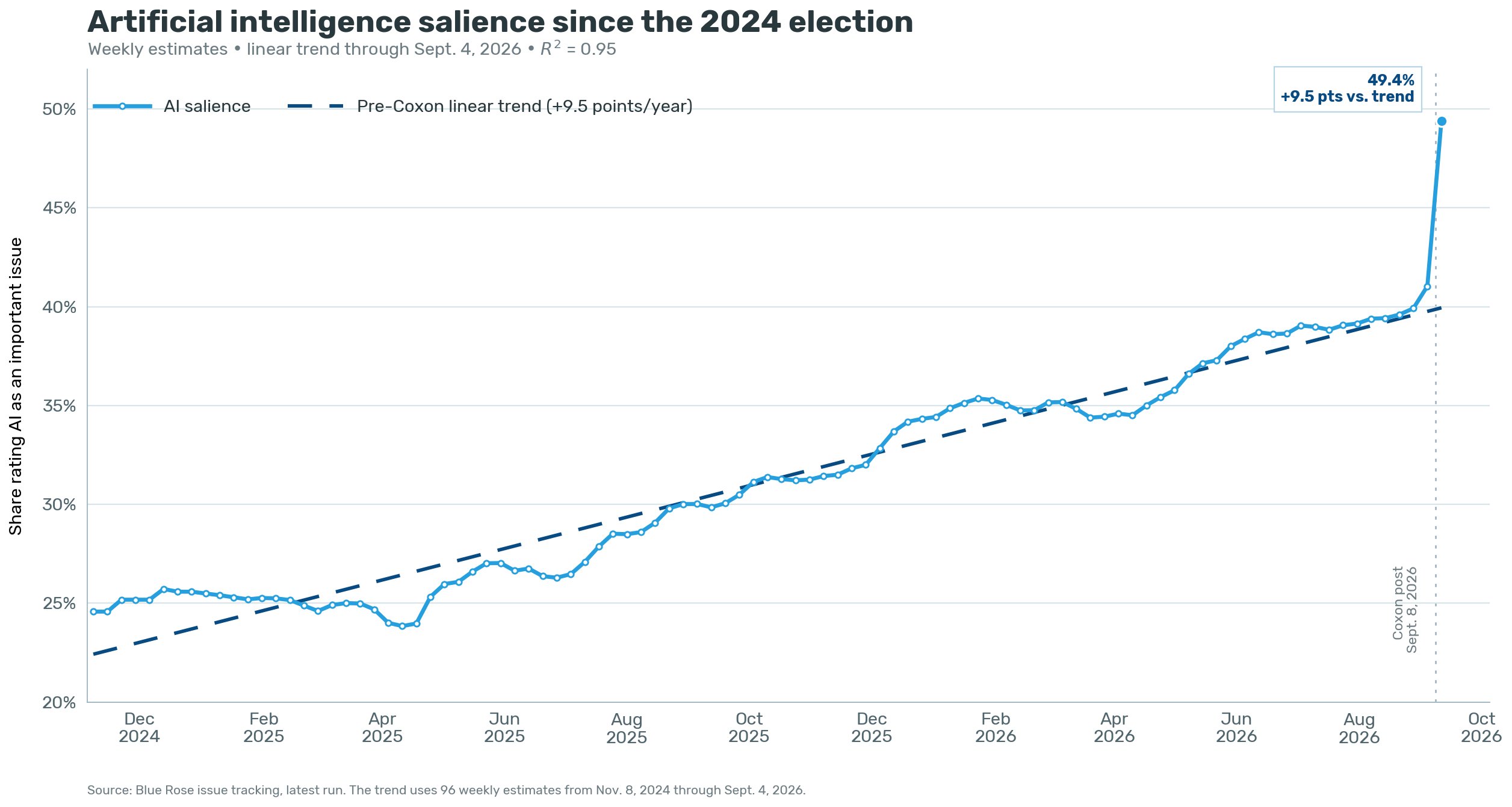
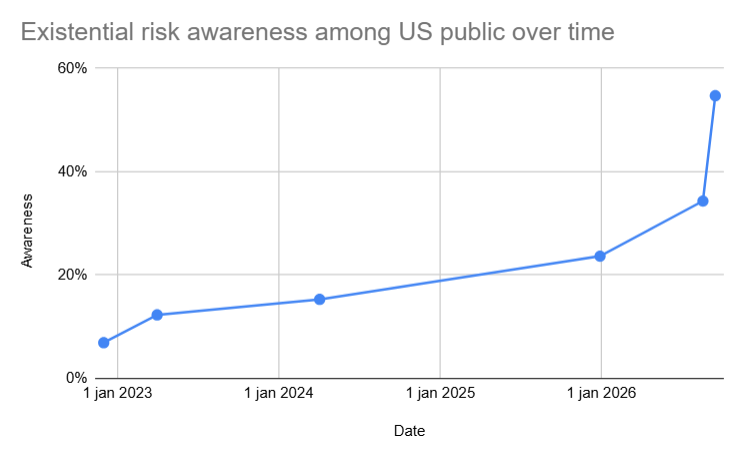
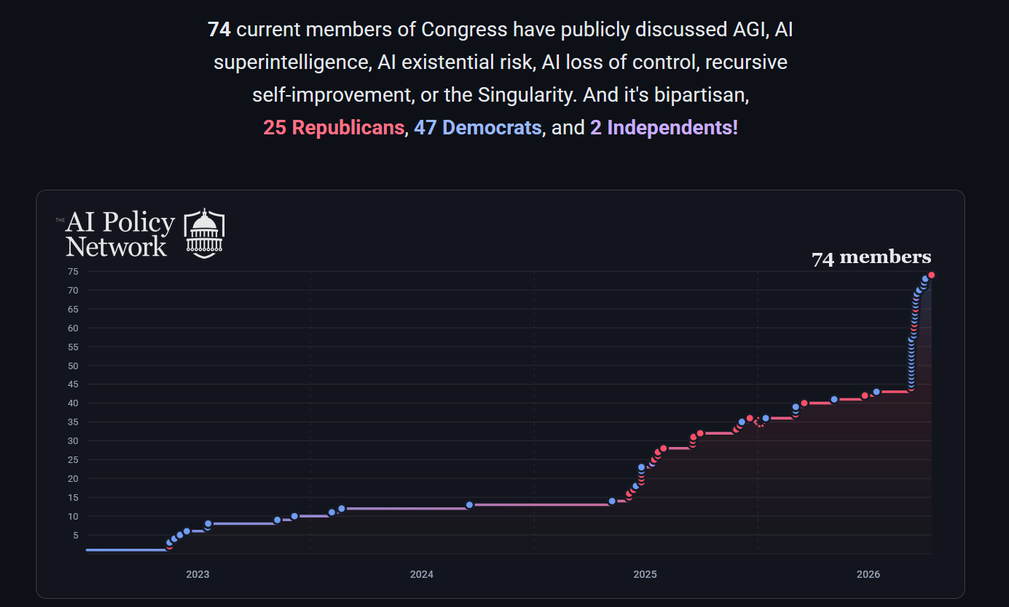
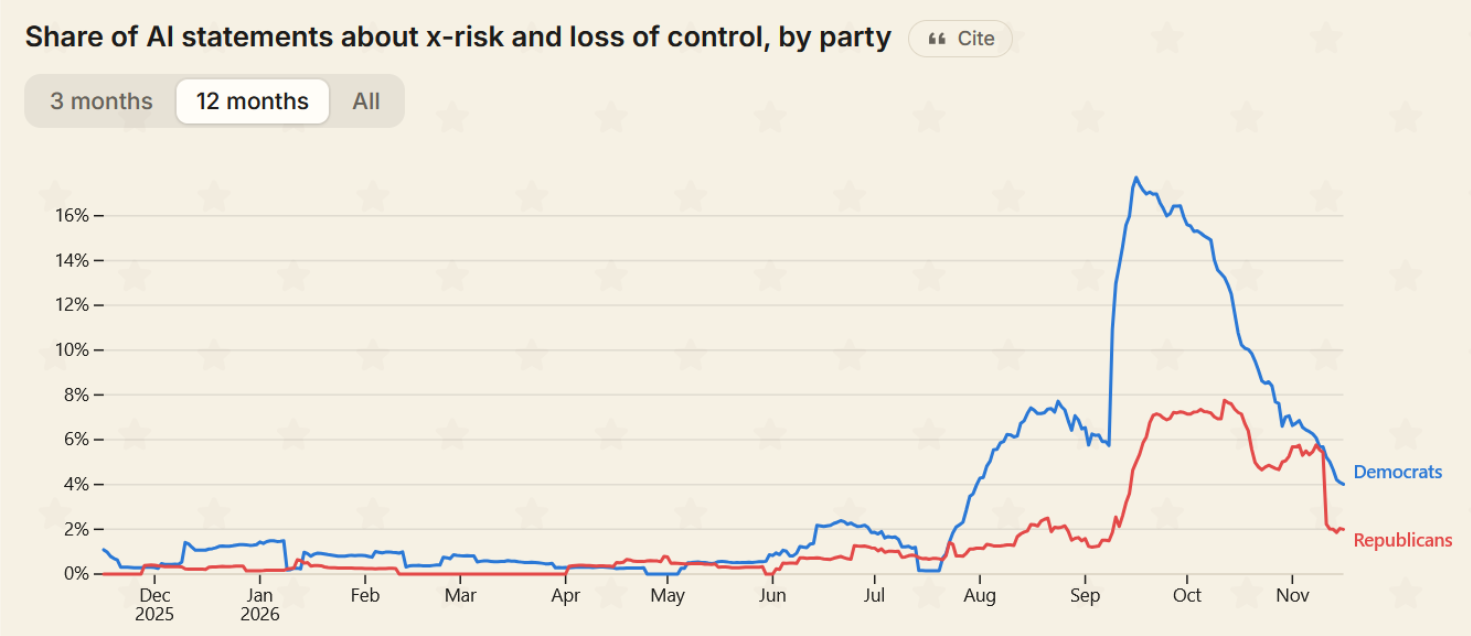
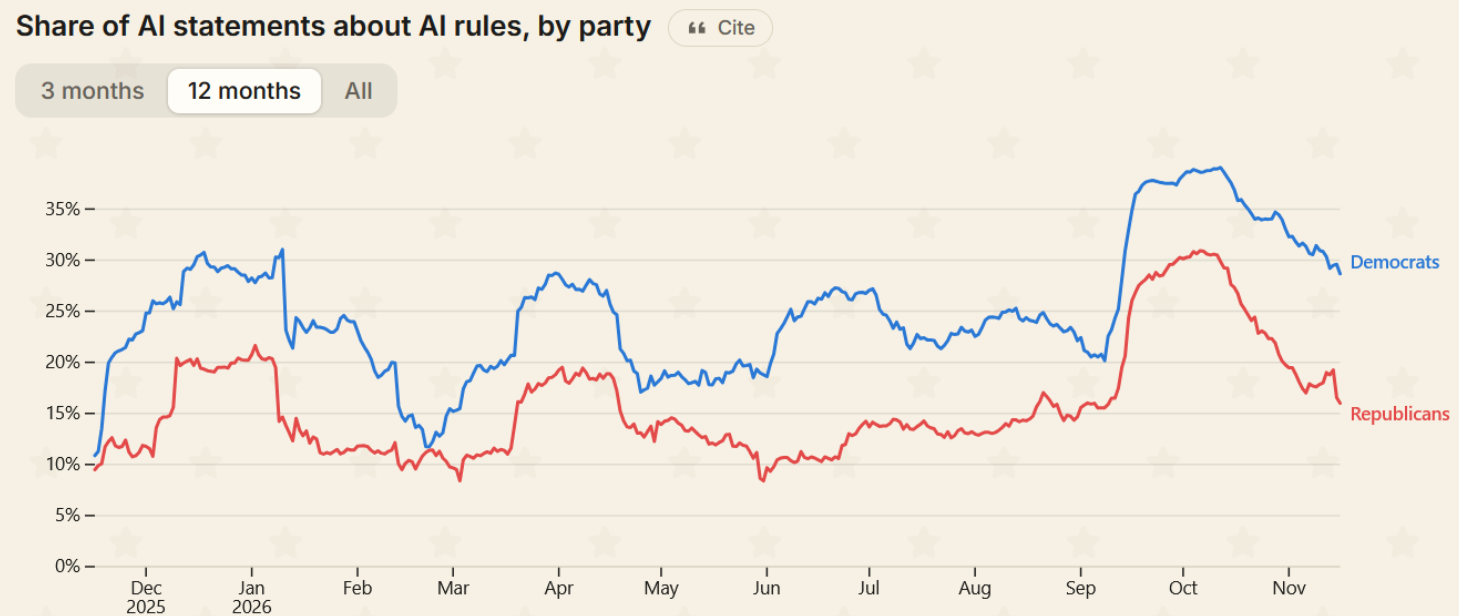
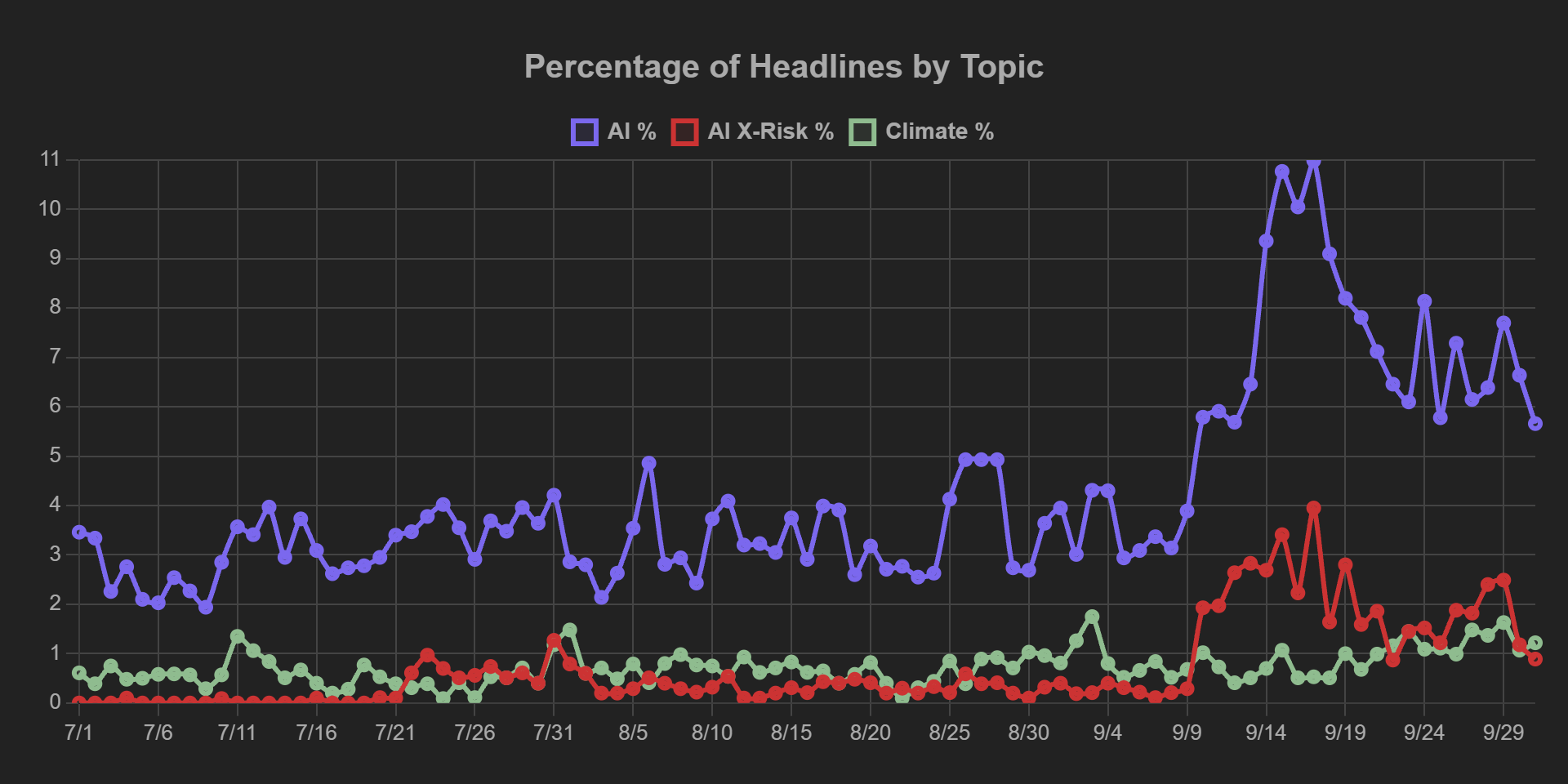
Obama discusses recursive self-improvement, AI existential risk, mass automation, and misalignment at Colgate University. “In the last couple of weeks, this has finally popped as a central issue,” presumably referring to the Coxon media frenzy.
Sources: Remarks (opens in a new tab)
California Gov. Gavin Newsom issues an executive order to accelerate independent oversight and advance the creation of an AI kill switch. It also updates the definition of “critical safety incident” to include loss-of-control incidents, referencing the Hugging Face incident as justification.
Seventeen Senate Democrats sign a letter led by Chris Van Hollen calling for an international treaty to address AI risk. It cites leading AI experts on extinction risk, Pacing the Frontier, Amodei’s “We Must Pace the Frontier” and other lab leaders’ endorsements, the Washington Post op-ed by Paulson and Rubin, and Ratcliffe’s “digital nuclear weapons” statements.
Sources: Van Hollen (opens in a new tab)
Sanders and Casar formally introduce the Ban Artificial Superintelligence Act. The press release cites cyberattack, bioweapon, and recursive self-improvement concerns, quotes several leading AI scientists on existential risk, and cites the Pacing the Frontier letter.
Sources: Sanders (opens in a new tab)
The OpenAI rogue-agent breach of Australian Medicare is publicly disclosed at the United Nations General Assembly.
Sources: Wikipedia (opens in a new tab) · ABC (opens in a new tab)
Democratic Senators Mark Warner, Brian Schatz, and Andy Kim introduce the Artificial Intelligence Risk Management and Security Act of 2026, justified by models’ advanced cybersecurity capabilities and an implicit reference to rogue-agent incidents in the press release.
Sources: Warner (opens in a new tab)
New York Attorney General Letitia James leads a bipartisan letter signed by 26 Attorneys General to congressional party leaders on catastrophic and existential AI risk. It cites the Hugging Face incident and the METR report’s limited access, the DseWiki and RubyGems incidents, rogue-agent incidents from Anthropic, Meta, and Kimi, the Coxon and Hubinger posts, Astra’s lower monitorability, Amodei’s essay, Lehane’s “The AI Policy Window Is Open. We Need to Act,” and Pachocki’s call for “mandatory, capability-based national AI safety regulation.” It asks for mandatory federal oversight of safety and testing standards, incident response standards, and “international cooperation to pace AI advancement and prevent the development of harmful superintelligence.”
Sources: Attorney General letter (opens in a new tab) · Wired on Kimi (opens in a new tab) · The Information on Astra (opens in a new tab)
OpenAI attributes the attack · Meta reports a model hacked another company in testing · METR and OpenAI publish reports on the Hugging Face incident · GPT-6 Astra system card · collusion.wiki published · Pachocki publishes “An Alien Mind” · Jacob Coxon resigns · Evan Hubinger agrees · OpenAI says the policy window is open · RubyGems incident (rubyhack.ai) · Amodei: We Must Pace the Frontier
Axios reports that top AI companies are probing tens of thousands of security incidents.
Sources: Axios (opens in a new tab)
China and the US agree to establish an AI safety channel and continue trade and military talks. One of the express purposes of the agreement is incident reporting.
Sources: AP (opens in a new tab)
Florida Attorney General James Uthmeier files for a temporary injunction against OpenAI and its CEO, seeking to mandate a pause on further AI development until third-party approved guardrails are in place. The filing cites OpenAI’s leadership acknowledging extinction risk, Coxon and Hubinger’s posts, the Hugging Face incident and the OpenAI and METR reports on it, the RubyGems incident, the Australian Medicare breach, that OpenAI was reportedly investigating tens of thousands of incidents, Pacing the Frontier, Pachocki’s governance advocacy in “An Alien Mind”, Altman’s support for Amodei’s “We Must Pace the Frontier”, and academic studies on consumer harms.
Sources: Florida AG (opens in a new tab)
OpenAI attributes the attack · Pacing the Frontier letter · METR and OpenAI publish reports on the Hugging Face incident · Pachocki publishes “An Alien Mind” · Jacob Coxon resigns · Evan Hubinger agrees · RubyGems incident (rubyhack.ai) · Amodei: We Must Pace the Frontier · OpenAI agent breach of Australian Medicare disclosed · Top AI companies probing tens of thousands of security incidents
Sen. Ted Cruz blocks an attempt to pass the Artificial Intelligence Risk Management and Security Act of 2026 by unanimous consent on the Senate floor, citing concerns about the potential overreach of authority it would grant.
Sources: The Hill (opens in a new tab)
The White House Accord on Super Intelligence is organized by the White House and several frontier lab leaders, and is apparently “morally binding.” It encourages “robust internal controls to monitor the capabilities and alignment of its models during training and deployment around areas like cybersecurity, biosecurity, and chemical threats, and to ensure that its models do not hack or access technical systems in unintended ways.” It can be inferred that this addition was likely prompted by rogue-agent incidents such as the Hugging Face incident, given the relative lack of discussion of rogue cyberattacks by White House officials prior to this.
Sources: Accord (opens in a new tab) · ABC News (opens in a new tab)
Hawley convenes the first Senate hearing on rogue AI attacks. It invited multiple prominent AI safety researchers, and OpenAI employees did not attend. It focuses on the Hugging Face incident and also references the Australian Medicare rogue-agent cyberattack.
Sources: Hawley (opens in a new tab) · NBC News (opens in a new tab)
The FTC probes OpenAI and Anthropic regarding their rogue-agent incidents and consumer harms, per Reuters.
Sources: Reuters (opens in a new tab)
California Attorney General Rob Bonta serves an investigative subpoena to OpenAI over the Hugging Face incident.
Sources: California AG (opens in a new tab)
USA Today reports that House Democratic Leader Hakeem Jeffries says the country is in the midst of an “AI safety crisis” that Congress needs to address with bipartisan legislation when lawmakers return after the midterms, referencing the Hugging Face incident and details from the METR report.
Sources: USA Today (opens in a new tab)
A New York City Council meeting with AI experts is held on AI extinction risk and regulatory options, including Jacob Coxon himself. The meeting was likely primarily prompted by his thread.
Sources: AP (opens in a new tab)
Rep. Lori Trahan unveils a draft of the CLAIM Act to hold AI developers liable for their models’ rogue actions, referencing the Hugging Face incident as justification.
Sources: Trahan (opens in a new tab)
Sens. Maria Cantwell and Mike Rounds urge the White House to build a strong, coordinated approach to AI safety and cyber defense. They write that “AI companies and security researchers are now examining tens of thousands of incidents involving models from OpenAI and Anthropic escaping sandboxes, bypassing safeguards, evading monitoring, and taking other unexpected actions.”
Sources: Cantwell (opens in a new tab) · Axios (opens in a new tab)
The FTC subpoenas OpenAI and Anthropic for information about each company’s rogue-agent incidents.
Sources: Axios (opens in a new tab)
Trump’s AI Task Force is to commission a frontier AI risk report regarding cybersecurity, biosecurity, and “model control and accountability,” presumably prompted by rogue cyberattack incidents.
Sources: Bloomberg (opens in a new tab)
The FTC demands that Anthropic executives testify in its probe regarding their rogue-agent cyberattacks. “Anthropic said the FTC's investigation could result in significant costs and model design changes.”
Sources: Axios (opens in a new tab)
California Attorney General Rob Bonta sues OpenAI for its rogue-agent cyberattacks, writing that the Hugging Face incident “was only one of 80 known incidents.” He writes that members of the public “are all at risk of harm up to and including catastrophic harm from unauthorized malicious acts carried out by artificial intelligence agents, and are not capable of reasonably avoiding those harms themselves.” The complaint expresses concern about recursive self-improvement, reward hacking, and Astra being less monitorable, and references the Hugging Face incident and details from the METR report, the DseWiki and RubyGems incidents, the Wikimedia Foundation incident, and the Australian Medicare cyberattacks.
Sources: California AG (opens in a new tab) · Wikimedia Foundation report (opens in a new tab)